

Views: 0 Author: Site Editor Publish Time: 2025-12-03 Origin: Site


Golf carts are no longer just vehicles for transporting players around a golf course. Over the years, they have become essential tools in resorts, gated communities, airports, and outdoor recreational activities. As these vehicles continue to gain popularity, the need for advanced and efficient battery technology has become more critical than ever.
In this article, we’ll explore the latest developments in golf cart battery technology. We’ll cover the traditional options like lead-acid batteries, examine the rise of lithium-ion technology, and discuss new innovations such as solid-state batteries and graphene. By the end, you’ll have a clear understanding of which battery technology is the best choice for your golf cart, depending on your usage, performance expectations, and long-term goals.
Before diving into the newer, cutting-edge technologies, it’s important to understand the traditional battery types commonly used in golf carts.
Lead-acid batteries are the most common type of battery historically used in golf carts. They are still widely used today, particularly in budget-conscious options.
Affordability: Lead-acid batteries are less expensive than newer technologies like lithium-ion.
Widespread Availability: They are easy to find and come with many replacement options worldwide.
Simplicity: These batteries are simple to understand and repair.
Heavier: Lead-acid batteries are bulky, which increases the weight of the golf cart, affecting performance and maneuverability.
Shorter Lifespan: Typically, lead-acid batteries last around 2 to 4 years with proper maintenance.
Requires Maintenance: These batteries need regular maintenance, including checking water levels, cleaning terminals, and ensuring proper charging cycles.
Less Energy-Efficient: They have a lower energy density, meaning they don’t store as much energy for the same amount of space compared to newer technologies.
NiMH batteries are an alternative to lead-acid, but they are less common in modern golf carts.
Better Performance: NiMH batteries provide a higher energy density than lead-acid, leading to improved performance and longer driving ranges.
More Environmentally Friendly: NiMH batteries are less toxic than lead-acid batteries.
Cost: They are generally more expensive than lead-acid batteries.
Less Widely Available: NiMH batteries are not as widely used in golf carts as lead-acid or lithium-ion batteries, limiting options for replacement and repair.
Lithium-ion (Li-ion) batteries have become the go-to technology for golf carts due to their superior performance and longer lifespan. They are a game-changer for the industry, providing many benefits over traditional battery types.
Lithium-ion batteries are significantly more efficient and versatile than both lead-acid and NiMH batteries. Their lightweight design, combined with improved energy density, makes them a preferred option for modern golf carts.
Longer Lifespan: A lithium-ion battery can last 5 to 10 years, significantly longer than lead-acid options.
Lightweight: Lithium-ion batteries are much lighter, making the golf cart easier to handle and improving its overall performance.
Faster Charging: These batteries can be charged more quickly than lead-acid batteries, reducing downtime.
Energy Efficiency: They offer better energy storage, which allows for longer range and fewer recharges.
Feature | Lead-Acid Battery | Lithium-Ion Battery |
Lifespan | 2-4 years | 5-10 years |
Charging Time | 6-8 hours | 3-4 hours |
Weight | Heavy | Light |
Energy Efficiency | Lower | Higher |
Maintenance | High (regular watering) | Minimal (no maintenance) |
Cost | Low upfront cost | Higher upfront cost |
Performance | Lower range and slower speed | Longer range and higher speed |
Minimal Maintenance: Lithium-ion batteries don’t require the regular maintenance that lead-acid batteries do (such as adding water).
Eco-Friendly: Lithium-ion batteries have a smaller environmental footprint compared to lead-acid options due to fewer hazardous chemicals.
Upfront Cost: The initial cost is higher than lead-acid batteries, though the long-term benefits usually offset this cost.
Specialized Charging Systems: Lithium-ion batteries may require specific chargers to ensure safe and efficient charging.
Lithium-ion batteries improve the overall golf cart experience in several ways:
Range: Golf carts with lithium-ion batteries can travel longer distances without needing a recharge. This is ideal for large golf courses or resorts.
Speed: These batteries maintain a consistent power output, allowing for smoother and faster acceleration.
Weight Reduction: The lighter weight of lithium-ion batteries allows for better handling and more efficient energy use.
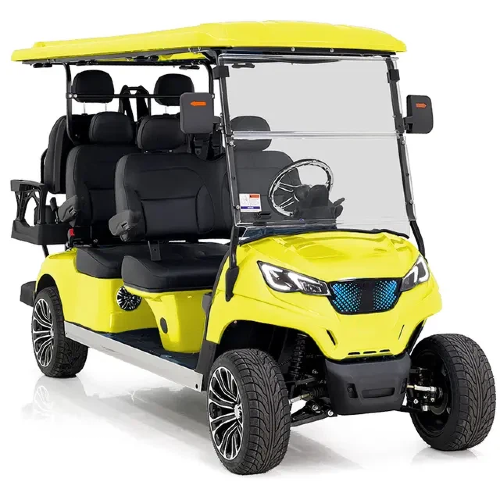
The battery technology used in golf carts is continually evolving. Several new and exciting technologies are being developed to improve performance, lifespan, and energy efficiency even further.
Solid-state batteries represent the next frontier in battery technology. Unlike traditional lithium-ion batteries, which use liquid electrolytes, solid-state batteries use a solid electrolyte. This change offers numerous advantages.
Higher Energy Density: Solid-state batteries can store more energy in the same space, leading to longer range and faster speeds.
Increased Safety: Solid-state batteries are less prone to overheating and are less likely to catch fire compared to lithium-ion batteries.
Longer Lifespan: They have a significantly longer lifespan, reducing the need for frequent replacements.
Graphene-based batteries are another emerging technology. Graphene is a single layer of carbon atoms arranged in a two-dimensional lattice, and it has remarkable electrical conductivity.
Faster Charging: Graphene batteries can charge much faster than current lithium-ion batteries.
Longer Lifespan: These batteries can last significantly longer due to the durability of graphene.
Better Performance: Graphene batteries have superior conductivity, which means higher energy output and efficiency.
Sodium-ion batteries are gaining attention as an alternative to lithium-ion due to the abundance and lower cost of sodium.
Lower Cost: Sodium-ion batteries are more affordable to produce, making them a more cost-effective option for consumers.
Environmental Impact: Sodium is more abundant than lithium, making sodium-ion batteries more sustainable and environmentally friendly.
Lower Energy Density: Sodium-ion batteries don’t hold as much energy as lithium-ion, which means they may not provide the same range or power.
Development Stage: Sodium-ion technology is still in the development stage and is not yet widely available for golf carts.
While not yet widely used in golf carts, hydrogen fuel cells are a potential alternative. These cells convert hydrogen into electricity to power the motor.
Zero Emissions: Hydrogen fuel cells only produce water as a byproduct, making them an extremely eco-friendly option.
High Energy Efficiency: Fuel cells can offer a higher efficiency than traditional batteries.
Cost: Hydrogen fuel cell technology is expensive to develop and implement.
Infrastructure: The infrastructure required to support hydrogen fuel cell-powered vehicles is still lacking in many areas.
As newer battery technologies emerge, golf carts are becoming more efficient, durable, and powerful.
The most significant impact of new battery technologies on golf cart performance is the range. With lithium-ion, solid-state, and graphene batteries, golf carts are able to travel much farther on a single charge. Solid-state batteries, in particular, could offer even longer range due to their higher energy density.
While newer technologies like lithium-ion, solid-state, and graphene batteries have higher initial costs, they reduce long-term expenses due to their longer lifespan and minimal maintenance. Additionally, their improved efficiency leads to fewer recharges, saving both time and money.
New battery technologies, such as lithium-ion and solid-state, are significantly more eco-friendly compared to traditional lead-acid batteries. With increased energy efficiency and the potential for zero emissions with hydrogen fuel cells, golf carts are becoming greener and more sustainable.
Looking ahead, we expect to see more innovations in battery technology for golf carts. Researchers are continually working to improve energy density, charging speeds, and overall efficiency. As these advancements become more accessible, we can expect golf carts to become even more environmentally friendly, cost-effective, and efficient.
Battery technology plays a crucial role in enhancing the performance, lifespan, and environmental footprint of golf carts. While traditional lead-acid batteries remain widely used, innovations like lithium-ion, solid-state, and graphene batteries are paving the way for a more efficient and sustainable future. These advanced technologies offer numerous benefits, such as longer lifespans, faster charging times, and reduced maintenance requirements. However, each comes with its own set of challenges, such as higher upfront costs or the need for specialized infrastructure.
At Shandong Yongli New Energy Vehicle Industry Co., Ltd., we are committed to offering cutting-edge golf carts powered by the latest in battery technology. Our products, equipped with lithium-ion and other innovative battery solutions, are designed to provide superior performance, longer ranges, and minimal maintenance. We invite you to explore our range of golf carts and learn how our advanced battery technologies can enhance your experience. Whether you're seeking efficiency, reliability, or sustainability, we are here to help you make the best choice for your needs. Feel free to contact us for more information or to discuss how we can meet your specific requirements.
1. What is the best battery for a golf cart?
Lithium-ion batteries are considered the best option for golf carts due to their long lifespan, energy efficiency, and minimal maintenance requirements.
2. Are solid-state batteries ready for golf carts?
Solid-state batteries show great promise but are still in development. They are expected to offer superior performance and safety once they become widely available.
3. How much do lithium-ion batteries cost for golf carts?
Lithium-ion batteries typically have a higher initial cost than lead-acid batteries but save money in the long term due to their longer lifespan and low maintenance.
4. Can I upgrade my golf cart from lead-acid to lithium-ion batteries?
Yes, many golf cart owners choose to upgrade to lithium-ion batteries for better performance, but the cart may require some adjustments, such as a new charger.
5. What is the lifespan of a lithium-ion battery in a golf cart?
A lithium-ion battery can last anywhere from 5 to 10 years, depending on usage and maintenance.
6. Will hydrogen fuel cells be used in golf carts in the future?
Hydrogen fuel cells are a promising alternative but are currently not widely used in golf carts due to their high cost and the lack of fueling infrastructure.


