

Views: 0 Author: Site Editor Publish Time: 2025-11-28 Origin: Site


When it comes to choosing the right battery for your golf cart, understanding the different options available can significantly impact your cart's performance, lifespan, and maintenance costs. The battery powers the entire electric vehicle, and its choice will determine how far the cart can travel, how often it needs charging, and how much it will cost to maintain.
Among the most common types of batteries for golf carts are lead-acid and lithium-ion. Each comes with its own advantages and disadvantages, making it essential to understand their differences before making a decision. In this article, we will dive deep into both options and explore what makes each one unique. We will also provide a comparison to help you determine the best battery type for your golf cart needs.
A golf cart relies heavily on its battery to provide the necessary power to the motor and keep it running. The battery determines several critical aspects of the golf cart, such as its range, speed, and efficiency. A powerful and efficient battery ensures your golf cart operates smoothly, without unnecessary interruptions during use.
Powering the Motor: The battery provides electrical power to the motor that drives the wheels of the cart.
Driving Range: A battery’s capacity determines how far the cart can travel on a single charge.
Speed Control: Higher-capacity batteries can help the cart maintain its top speed over longer distances.
Efficiency: The efficiency of the battery impacts how quickly it charges and how much energy is used for every mile driven.
Lead-acid batteries have been the traditional choice for golf carts for many years. These batteries are the go-to option for many entry-level carts due to their lower initial cost. However, they come with trade-offs in terms of weight, maintenance, and lifespan.
Lower Initial Cost: Lead-acid batteries are typically less expensive than lithium-ion batteries.
Widely Available: These batteries are easily found and have numerous replacement options available globally.
Durability: Lead-acid batteries are robust and can perform well if properly maintained.
Heavy Weight: Lead-acid batteries tend to be much heavier than lithium-ion, which can affect the overall weight and maneuverability of the cart.
Shorter Lifespan: On average, lead-acid batteries last 2 to 4 years, depending on usage and maintenance.
Requires Maintenance: Lead-acid batteries need regular maintenance, such as adding distilled water and cleaning to avoid corrosion.
Less Energy Efficient: These batteries are less efficient and take longer to charge compared to their lithium-ion counterparts.
Lithium-ion batteries are an increasingly popular choice for golf carts due to their superior performance and longevity. These batteries are becoming the industry standard for more advanced, high-performance carts.
Longer Lifespan: Lithium-ion batteries typically last 5 to 10 years, much longer than lead-acid options.
Lighter Weight: Lithium-ion batteries are much lighter than lead-acid, which improves the golf cart’s overall handling and efficiency.
Minimal Maintenance: These batteries require little to no maintenance. There is no need for watering or cleaning terminals.
Faster Charging: Lithium-ion batteries charge more quickly than lead-acid batteries, providing a quicker turnaround time for golf cart usage.
Higher Energy Efficiency: Lithium-ion batteries are more energy-efficient, offering longer ranges on shorter charging times.
Higher Initial Cost: The upfront cost of lithium-ion batteries is significantly higher than lead-acid batteries.
Less Availability: While lithium-ion batteries are becoming more common, they are still not as widely available as lead-acid batteries, especially in remote areas.
Selecting the best battery type for your golf cart depends on various factors, including the usage requirements, maintenance preferences, budget, and performance needs.
The type of battery you need largely depends on how you intend to use the golf cart. For example:
Leisure Use: If you use your golf cart for short trips around a resort or community, a lead-acid battery may be sufficient.
Commercial or Frequent Use: If your golf cart will be used frequently or for long periods, lithium-ion batteries offer better performance, longer lifespan, and reduced maintenance.
Lead-acid batteries come with a lower initial cost, making them an attractive option for those on a tight budget. However, if you consider the total cost of ownership (including replacement costs and maintenance), lithium-ion batteries may be a better long-term investment due to their longer lifespan and lower maintenance requirements.
Lead-acid batteries require regular maintenance, including checking water levels, cleaning terminals, and replacing the battery every few years. On the other hand, lithium-ion batteries require little to no maintenance and offer significantly longer lifespan, reducing overall costs in the long term.
Lithium-ion batteries generally perform better in varied environmental conditions, such as extreme temperatures. Lead-acid batteries can struggle with performance in colder weather and require careful maintenance to ensure they continue to perform optimally.
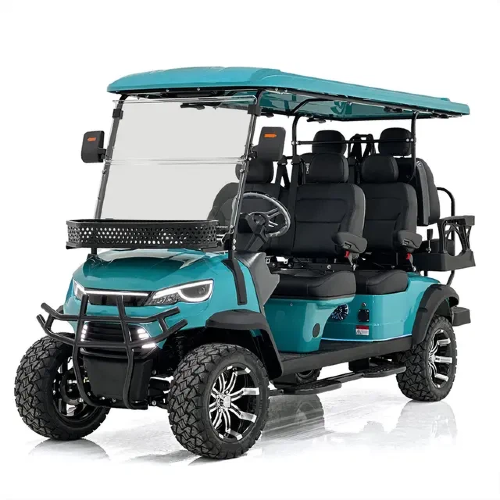
The performance of a battery is crucial to how well a golf cart will operate, and different battery types offer varying levels of performance. Here is a direct comparison of lead-acid vs lithium-ion batteries across several key metrics:
Feature | Lead-Acid Battery | Lithium-Ion Battery |
Lifespan | 2-4 years | 5-10 years |
Charging Time | 6-8 hours | 3-4 hours |
Weight | Heavier | Lighter |
Maintenance | High (watering, cleaning) | Minimal (no maintenance) |
Cost | Lower initial cost | Higher initial cost |
Energy Efficiency | Less efficient | More efficient |
Range per Charge | Shorter | Longer |
Consider how often and for what purposes you’ll use the golf cart. If you plan to use the cart frequently, especially for longer trips, a lithium-ion battery may be the best option due to its longer lifespan, energy efficiency, and faster charging.
While lead-acid batteries are more affordable initially, lithium-ion batteries offer better overall value with lower maintenance and longer durability. Consider the total cost of ownership when making your decision.
If you want a low-maintenance option, a lithium-ion battery is the best choice. These batteries require little upkeep and can last significantly longer than lead-acid alternatives, saving you time and money.
Chinese golf cart manufacturers are leading the industry in terms of cost-effectiveness, quality, and innovation. Companies such as Shandong Yongli New Energy Vehicle Industry Co., Ltd. offer cutting-edge technology and a wide variety of golf carts with lithium-ion batteries to meet the needs of both resorts and golf courses worldwide.
Cost-effectiveness: Competitive prices without compromising quality.
Innovative Designs: Manufacturers are incorporating modern features like GPS, Bluetooth, and solar charging.
Quality Control: Chinese manufacturers adhere to international standards, ensuring high-quality products.
Choosing the right battery for your golf cart is crucial to ensure optimal performance and long-term satisfaction. If you're looking for a cost-effective, short-term solution, lead-acid batteries may be a suitable option. They offer a lower initial cost and are widely available, but they require more maintenance and have a shorter lifespan. On the other hand, if you're seeking a long-term investment with superior performance, lithium-ion batteries are the clear choice. Their longer lifespan, better energy efficiency, faster charging, and minimal maintenance make them an ideal solution for modern golf carts.
At Shandong Yongli New Energy Vehicle Industry Co., Ltd., we specialize in providing high-quality golf carts equipped with advanced lithium-ion batteries. Our products are designed to meet the needs of both residential and commercial users, offering improved performance, lower maintenance costs, and greater reliability. We invite you to explore our range of golf carts and get in touch with us to discuss how we can help provide the perfect battery solution for your needs.
1. Which battery lasts longer in a golf cart?
Lithium-ion batteries generally last 5 times longer than lead-acid batteries, offering up to 10 years of use, compared to lead-acid’s 2-4 years.
2. Are lithium-ion batteries worth the higher upfront cost?
Yes, despite the higher initial cost, lithium-ion batteries offer a longer lifespan and lower maintenance, making them more cost-effective in the long run.
3. How often do I need to maintain a lead-acid battery in a golf cart?
Lead-acid batteries require regular maintenance, including checking water levels, cleaning the terminals, and ensuring proper charging cycles.
4. Can I upgrade my golf cart from lead-acid to lithium-ion batteries?
Yes, you can upgrade your golf cart to lithium-ion batteries. However, you may need to adjust the charging system and ensure that the new battery fits your cart's specifications.
5. How does temperature affect battery performance in golf carts?
Extreme temperatures, both hot and cold, can reduce battery performance and lifespan. Lithium-ion batteries tend to perform better in a wider range of temperatures compared to lead-acid batteries.
6. What is the typical charging time for golf cart batteries?
Lead-acid batteries typically take about 6-8 hours to fully charge, while lithium-ion batteries charge much faster, often taking 3-4 hours.


